Marble Tile for Sale: How to Choose Natural Stone That Looks Beautiful for Years
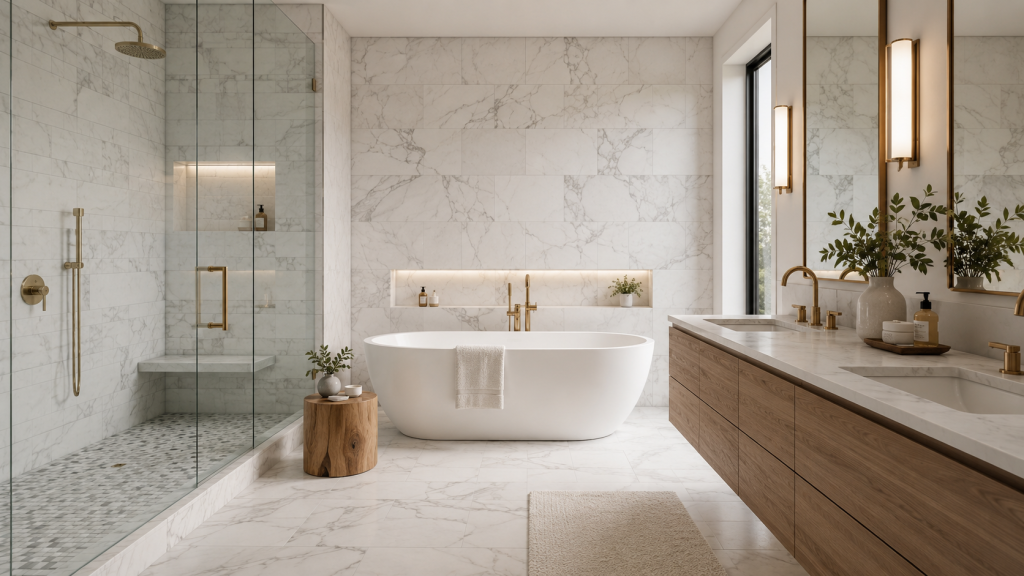
There is something unmistakable about real marble. You can imitate its veining, reproduce its colors, and manufacture surfaces that look surprisingly convincing from a distance, but natural stone still has a character of its own. Every variation in tone, every mineral line, and every small irregularity tells you that the material was formed rather than printed.
That distinction matters when searching for marble tile for sale.
A photograph may immediately catch your attention, but choosing marble should go beyond asking, “Does this look good?” The better questions are about where the tile will be installed, how much maintenance you are comfortable with, what finish works for the space, how the individual pieces will interact, and whether the material suits the realities of everyday use.
A dramatic marble that looks incredible across a showroom wall may not be the smartest choice for every shower floor. A subtle stone that seems almost understated in a sample can become spectacular once installed across an entire bathroom.
That is why buying marble is partly about aesthetics and partly about understanding the material.
Why Marble Tile Still Feels Different
Marble has been used in architecture and interior design for centuries, yet it rarely feels tied to one specific period. The reason is surprisingly simple: marble is visually expressive without requiring decoration to make it interesting.
Its pattern is already inside the material.
Depending on the stone, you may encounter soft cloudy movement, bold contrasting veins, warm beige undertones, cool whites, gray fields, or dramatic darker markings. Even tiles cut from the same stone can differ noticeably.
That variation is not necessarily a defect. It is part of what people are buying.
When reviewing marble tile for sale, therefore, do not approach natural marble with the expectations you might have for a printed porcelain product. With manufactured tile, consistency is often the goal. With marble, controlled variation is often part of the appeal.
Imagine two bathrooms with identical layouts.
The first uses highly uniform white ceramic tile. It can look clean, bright, and attractive.
The second uses natural marble with subtle gray veining. One tile has a sweeping line through its center, another has softer cloud-like movement, and a third contains only a delicate trace of gray.
The second room develops visual depth without needing a complicated pattern.
That is one of marble’s greatest strengths.
What to Consider Before Choosing Marble Tile for Sale
It is tempting to begin with color. In practice, the installation area should usually come first.
Ask yourself where the material will actually be used.
Is it intended for:
• a bathroom floor?
• a shower wall?
• a shower floor?
• a kitchen backsplash?
• an entryway?
• a decorative feature wall?
• a fireplace surround?
• a powder room?
The answer influences the appropriate tile size, surface finish, pattern, grout layout, and maintenance expectations.
For example, a large marble tile can create an elegant appearance across a bathroom wall because fewer grout joints interrupt the natural veining. On a shower floor, however, smaller pieces can make more practical sense because additional grout joints may contribute to grip and allow the material to follow the slope toward the drain more easily.
The most beautiful option is not automatically the most appropriate one.
“Where is this going?” should be one of the first questions in the selection process.
Understanding Natural Variation Before You Buy
One of the most important lessons for first-time marble buyers is that the installed surface will not look exactly like one sample tile.
Natural stone varies.
This is particularly important when you buy marble tiles online, because your decision may initially be based on product photography rather than seeing several boxes of material laid out in front of you.
Look carefully at photographs that show multiple pieces rather than focusing exclusively on a close-up image of one particularly attractive tile. You want to understand the general visual range.
Does the marble contain strong veins?
Are some pieces significantly darker?
Is the overall background warm or cool?
How much variation can you expect?
A good installation can actually use those differences to its advantage.
Professional installers frequently dry-lay natural stone before permanently setting it. This means arranging tiles temporarily, looking at the distribution of veining and color, and moving individual pieces when necessary.
Suppose six strongly veined tiles arrive in a batch. Installing all six beside one another could unintentionally create one visually heavy section of the room. Spreading them across the installation can produce a much more balanced composition.
This takes extra time.
It is usually worth it.
Marble Mosaic Tile: Small Pieces, Big Design Opportunities
Large-format marble gets plenty of attention, but marble mosaic tile opens a completely different design vocabulary.
Mosaics can introduce texture, geometry, movement, and detail without abandoning the authenticity of natural stone. Depending on the pattern, they can appear traditional, architectural, contemporary, decorative, or surprisingly understated.
The smaller format also makes mosaics particularly useful for areas where standard rectangular tiles may feel too rigid.
Where Marble Mosaics Work Particularly Well
A marble mosaic tile can be an excellent choice for shower floors, backsplashes, niches, accent areas, borders, and smaller bathroom surfaces.
Consider a simple example.
A homeowner wants a predominantly white marble bathroom but worries that covering every surface with the same rectangular tile will make the design feel flat. Rather than introducing another material, the designer uses larger marble tiles on the walls and a coordinating mosaic on the shower floor.
The stone family remains consistent, but the scale changes.
Suddenly, the room has another layer of detail.
This is an important design principle: contrast does not always require contrasting colors. Sometimes changing the format is enough.
Mosaic Patterns Can Change the Personality of a Room
Pattern matters almost as much as the stone itself.
Geometric arrangements can make marble feel crisp and architectural. More intricate mosaics can introduce a decorative quality. Classic patterns can reinforce the historical character associated with marble, while restrained shapes can work comfortably in contemporary interiors.
The key is proportion.
An elaborate marble mosaic tile covering a huge room may become visually overwhelming. The exact same material used inside a shower niche or across a backsplash can become the detail that brings the entire design together.
There is a useful question designers often ask:
“Where do I want the eye to stop?”
If the answer is the shower, fireplace, vanity wall, or kitchen backsplash, that area can support more visual detail. The surrounding surfaces can then remain quieter.
Polished, Honed, and Other Surface Considerations
Finish changes both the appearance and practical behavior of marble.
A polished finish reflects more light and tends to emphasize color and veining. It can make marble appear richer and more dramatic. This is one reason polished stone often creates such an immediate impression.
Honed marble generally has a softer, more matte appearance. It can feel calmer and less formal, and it may be preferred in spaces where a high-gloss surface is not desirable.
Neither finish is universally better.
The choice depends on the project.
Imagine a glamorous powder room with decorative lighting, metallic fixtures, and a statement vanity. Polished marble may reinforce the intended effect.
Now picture a relaxed bathroom with natural wood cabinetry, understated fixtures, and warm neutral colors. A softer finish could feel more appropriate.
Choose the finish for the room you are creating, not simply because one sample looks more impressive under showroom lighting.
Practical considerations matter too. Wet areas, floors, and heavily used surfaces have different requirements from decorative walls.
Marble Requires Realistic Maintenance Expectations
This is where a professional marble guide should resist pretending that natural stone has no disadvantages.
Marble requires care.
It is a calcium-based natural stone and can react with acidic substances. Depending on the application, sealing may also be appropriate. Spills, cleaning products, moisture exposure, and daily wear should all be considered.
If you want a surface that can be treated carelessly without consequences, another material may sometimes be the more sensible choice.
That does not make marble impractical.
It means expectations matter.
For example, marble on a decorative bathroom wall experiences very different conditions from marble used on a heavily worked kitchen surface. The location changes the maintenance equation.
People who understand the material before installation are generally in a much better position to enjoy it afterward.
Why the Cheapest Marble Tile for Sale Is Not Always the Best Value
Price naturally influences purchasing decisions, especially when covering a large area.
But comparing marble tile for sale purely by the price per square foot can be misleading.
Material cost is only one part of the completed project.
You should also consider:
• installation complexity
• expected waste
• shipping or delivery
• substrate preparation
• grout and setting materials
• sealing requirements
• pattern matching
• labor for mosaics or intricate layouts
• extra material for future repairs
Suppose Product A costs noticeably less than Product B. At first glance, A appears to be the obvious bargain.
But Product A has greater dimensional variation, requires additional sorting, produces more unusable pieces during installation, and needs more labor to achieve the desired appearance.
The final difference may become much smaller than expected.
This is why value should be judged at the project level, not merely from the price printed beside the product.
How Much Extra Marble Should You Order?
Ordering exactly the measured square footage is risky.
Cuts create waste. Tiles can occasionally be damaged during transportation or installation. Veining may cause you to reject a particular piece for a highly visible location. Complex layouts can increase material consumption further.
The appropriate overage depends on the installation and pattern, but planning extra material is generally sensible.
Straightforward layouts typically require less additional material than diagonal designs, elaborate patterns, or rooms containing many corners and obstacles.
There is another reason to keep spare tiles.
Natural stone is inherently variable, and finding an exact visual match several years later may be difficult. Retaining a small quantity from the original installation can be extremely useful if a tile ever needs replacement.
A few spare pieces stored after the project can save a disproportionate amount of trouble later.
Buying Marble Tiles Online Without Seeing the Entire Batch
The ability to buy marble tiles online gives homeowners, designers, contractors, and renovators access to a much broader selection than they might find locally.
It also changes how products need to be evaluated.
Do not make the decision from the hero image alone.
Review dimensions, finish, material description, pattern, intended application, and available photographs carefully. Pay attention to whether the images demonstrate natural variation.
You should also calculate the required quantity before ordering rather than adding boxes to the cart based on a rough guess.
For instance, imagine a bathroom floor measures 92 square feet. Ordering material for exactly 92 square feet leaves essentially no margin for cuts, breakage, sorting, or future replacement.
The smarter calculation includes appropriate overage based on the layout.
When purchasing from a specialist such as Surfaces Galore, browsing the selection can also help you compare marble formats and patterns within the broader context of the project instead of viewing each tile as an isolated product.
Large Tile or Marble Mosaic Tile?
These formats are not necessarily competitors.
In many projects, they work best together.
Large marble tiles can make a surface feel expansive and emphasize broad natural veining. Fewer grout lines can produce a calmer overall composition.
A marble mosaic tile, by contrast, introduces more joints and more visual rhythm. It can adapt effectively to smaller areas and can provide a deliberate decorative element.
A strong bathroom design might therefore use:
• larger marble tile across the main walls
• coordinating marble on the bathroom floor
• mosaic marble inside the shower
• a related mosaic inside the niche
The result feels connected without becoming repetitive.
This is often more sophisticated than choosing four unrelated materials simply because each looks attractive individually.
Do Not Ignore Grout Color
Grout is sometimes treated as an afterthought. With marble, it can significantly influence the finished appearance.
A grout color close to the stone tends to reduce the visual dominance of the joints. The marble becomes the main feature.
A contrasting grout emphasizes the geometry.
Neither approach is automatically wrong, but the decision should be intentional.
This becomes particularly obvious with mosaics because they contain many more grout lines.
Take a pale marble mosaic tile with subtle gray movement. A closely matched grout may create a soft, almost continuous field. Darker contrasting grout can reveal every individual piece and transform the mosaic into a much stronger graphic pattern.
Same marble. Very different result.
Testing grout alongside actual tile samples before committing to the entire installation can prevent disappointment.
Marble in Bathrooms: Beauty Versus Practicality
Bathrooms are among the most natural environments for marble because water, stone, glass, metal, and soft lighting can create an exceptionally cohesive material palette.
But bathrooms also expose materials to moisture, cleaning products, cosmetics, and regular foot traffic.
This creates a compromise.
You want the visual character of natural stone, but you also need a surface appropriate for the specific location.
For shower installations, waterproofing beneath the tile is critical. Tile itself should never be expected to replace a properly constructed waterproofing system.
Slope matters too.
A beautiful shower floor that does not drain correctly is still a bad shower floor.
This illustrates an important principle: the quality of marble cannot compensate for poor installation.
Spend time choosing the stone, but take installation just as seriously.
Marble Backsplashes: A Different Kind of Application
A backsplash presents fewer structural challenges than a floor, but visual decisions become especially important because the surface sits near eye level.
Veining, pattern direction, outlets, cabinetry, range hoods, and lighting all affect the final composition.
For a quiet kitchen, rectangular marble tiles can create an understated natural backdrop.
For a stronger focal point, a mosaic may provide additional detail.
However, consider the surrounding materials before choosing something highly decorative.
If the countertop already has dramatic movement and the cabinetry contains strong grain, adding a busy backsplash may create competition rather than harmony.
Sometimes restraint is the more expensive-looking decision.
Common Mistakes When Shopping for Marble Tile for Sale
The first mistake is selecting entirely from a single photograph.
The second is ignoring variation.
The third is ordering insufficient material.
Another common problem is choosing the stone without considering the installation pattern. A tile that works beautifully in a straightforward grid can behave very differently in a diagonal or complex layout.
Homeowners also occasionally underestimate maintenance or choose cleaning products without checking whether they are suitable for natural stone.
And perhaps the biggest mistake?
Trying to make marble behave like porcelain.
Marble is attractive precisely because it is natural. If every variation, mineral mark, or change in veining is treated as a flaw, the buyer may be happier with a manufactured marble-look product.
That is a perfectly legitimate choice.
The material should match the person as much as the room.
Natural Marble Versus Marble-Look Porcelain
This comparison is worth making because both materials can be excellent when chosen for the right reasons.
Porcelain can provide greater consistency and often simpler maintenance. Modern manufacturing can reproduce marble-inspired patterns impressively.
Natural marble offers something different: genuine mineral structure and variation that is not simply printed onto the surface.
If authenticity and natural individuality are priorities, marble has a compelling advantage.
If maximum consistency and minimal sensitivity are more important, porcelain deserves consideration.
There is no reason to pretend every project has the same answer.
A luxury powder room, a family kitchen, a hotel bathroom, and a rarely used decorative fireplace surround all have different performance demands.
Good material selection acknowledges those differences.
A Practical Scenario: Planning a Marble Bathroom
Consider a homeowner renovating a 70-square-foot primary bathroom.
She initially searches for marble tile for sale and falls in love with a strongly veined white marble. Her first idea is to install the same large-format tile everywhere.
On paper, that sounds wonderfully simple.
Then the practical questions begin.
How will large tiles follow the shower slope?
Will the dramatic veining become overwhelming across every surface?
What happens around the niche?
After discussing the layout, the plan changes.
The large marble remains on the primary walls where its veining has room to breathe. A coordinating marble mosaic tile is selected for the shower floor. The niche repeats the mosaic to create a subtle connection. The remaining bathroom floor uses a quieter marble format.
The final design is actually more cohesive because it does not force one tile to perform every job.
That is the difference between choosing a beautiful product and designing a successful room.
Questions to Ask Before You Buy Marble Tiles Online
Before placing an order, work through a short checklist.
Where will the marble be installed?
Wall and floor applications can have different requirements.
What finish fits the application?
Do not decide on appearance alone.
How much variation do I want?
Some buyers love dramatic movement. Others prefer quieter stone.
How much material do I actually need?
Calculate the area and then account for the installation layout and appropriate overage.
Have I considered grout?
Especially important with mosaics.
Who will install it?
Experience with natural stone can make a visible difference.
Am I comfortable with marble maintenance?
Be realistic before purchasing rather than frustrated afterward.
Answering these questions makes it considerably easier to buy marble tiles online with confidence.
Why Installation Quality Matters So Much
Even exceptional material can look disappointing when installed poorly.
Uneven spacing, badly distributed veining, chipped cuts, poor substrate preparation, inappropriate setting materials, or rushed grout work can undermine the appearance of expensive stone.
Natural marble deserves planning.
Before installation begins, inspect the material. Where practical, arrange several tiles on the floor and look at them together. Identify pieces with unusual characteristics. Decide where stronger veins should appear.
Do not wait until adhesive has already been applied to start thinking about composition.
An experienced installer may say, “Let’s move this piece over here because that vein continues naturally into the next tile.”
That small decision can dramatically improve the finished wall.
Craftsmanship is visible in details like these.
How to Make Marble Feel Contemporary Rather Than Old-Fashioned
Marble does not determine the style by itself.
Context does.
Combine it with ornate fixtures, decorative moldings, and traditional cabinetry, and it can feel classical.
Pair the same stone with clean-lined cabinetry, restrained hardware, simple lighting, and large uninterrupted surfaces, and the result can feel distinctly contemporary.
Scale matters as well.
Larger tiles tend to create fewer visual interruptions. Mosaics introduce rhythm and texture. Mixing the two thoughtfully can create a room that feels layered without looking overly decorated.
For a modern project, one useful strategy is to allow marble to provide the visual movement while keeping surrounding elements relatively simple.
Let the stone do some of the work.
Choosing Marble You Will Still Appreciate Years Later
Trends can be useful for inspiration, but marble is usually purchased with a much longer horizon in mind.
Instead of asking only, “What is popular right now?” ask:
“Would I still enjoy seeing this every morning five or ten years from now?”
A dramatic mosaic may be exactly right for someone who loves expressive interiors. For another homeowner, a quieter marble with subtle veining will age more comfortably.
Neither preference is superior.
The goal is alignment between the material, the architecture, and the people using the space.
That is especially important when evaluating marble tile for sale, because the photographs that generate the strongest immediate reaction are not always the products that make the most satisfying long-term interiors.
Final Recommendation: Choose the Project First, Then the Marble
Searching for marble tile for sale should be exciting. Natural marble offers colors, patterns, finishes, and formats capable of transforming an ordinary surface into one of the defining elements of a room.
But the strongest results rarely come from choosing the most dramatic tile first and figuring everything else out afterward.
Start with the application.
Determine how the space will be used. Think about moisture, traffic, maintenance, lighting, grout, tile scale, and installation complexity. Decide whether large-format stone, marble mosaic tile, or a combination of both makes the most sense.
Then evaluate the marble itself.
When you buy marble tiles online, pay close attention to product information and natural variation, calculate quantities carefully, and order enough material for the realities of installation. Once the tiles arrive, inspect and arrange them before installation whenever possible.
Above all, accept marble for what it is.
It is not perfectly uniform. It requires more thought than some manufactured alternatives. There can be compromises involving maintenance, variation, cost, and installation.
Yet those same natural differences are precisely what make marble compelling.
The best marble project is not the one with the most expensive stone or the most complicated pattern. It is the one where material, layout, craftsmanship, and everyday use all make sense together.
Choose with that principle in mind, and marble can become far more than a surface covering. It becomes part of the architecture of the room—and something worth noticing every time you walk through the door.